When Projects Fail, It’s Rarely Technical
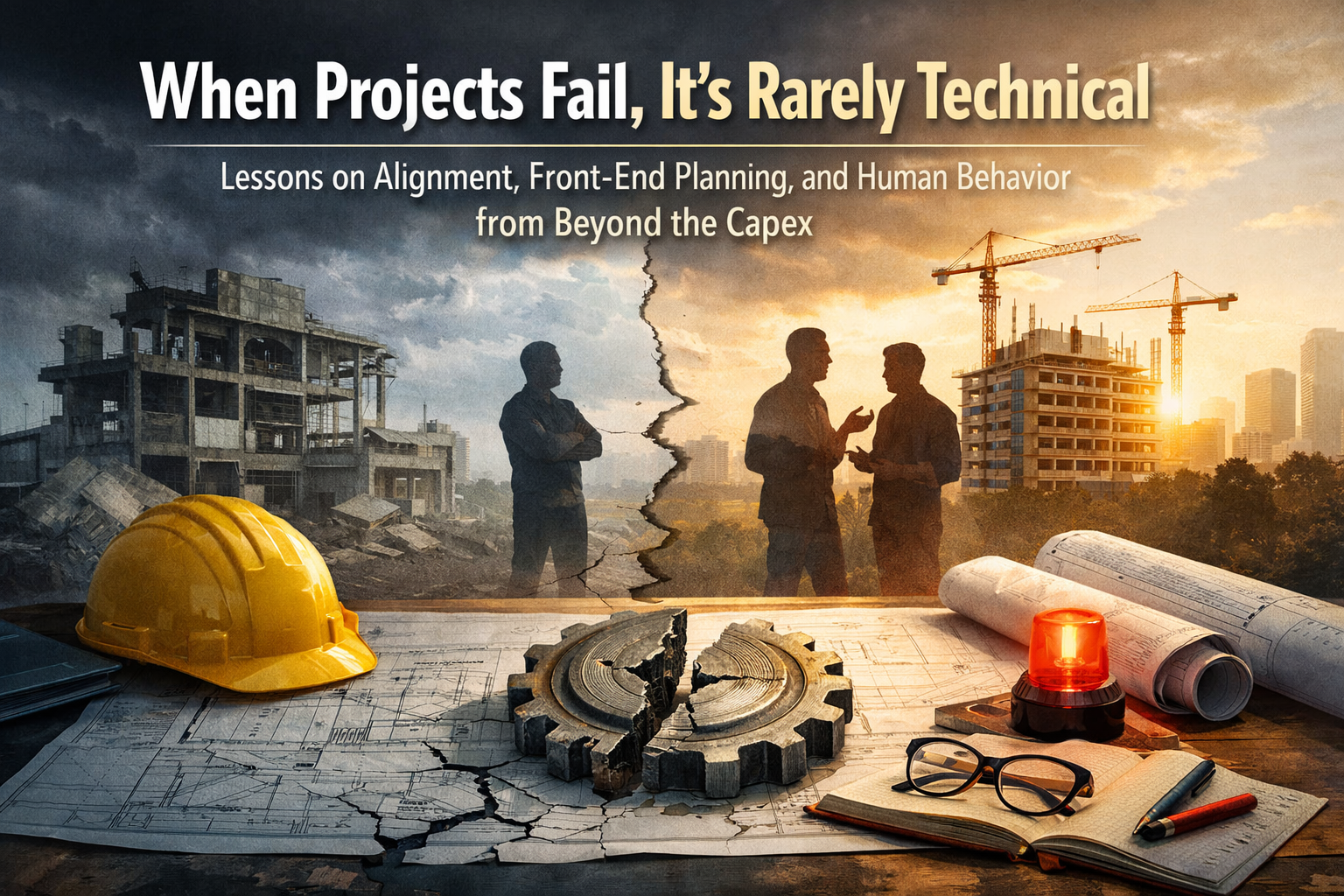
Lessons on Alignment, Front-End Planning, and Human Behavior from Beyond the Capex
One of the most persistent myths in capital and complex projects is that failure is primarily a technical problem. Bad design. Poor engineering. Inadequate tools.
But time and again, across industries, the real root cause shows up somewhere else.
In a recent episode of Beyond the Capex, we sat down with Bryan Guess, founder of Bartizan Group. His background spans commercial construction, building systems, and operational strategy. What started as a conversation rooted in buildings quickly expanded into something more universal: why projects that look “successful” on paper still fail the business.
A Perfectly Executed Project for the Wrong Reason
Bryan shared a story that perfectly illustrates the problem.
A regional developer owned a light industrial warehouse in a major urban market. Tenants were frustrated by ongoing roof leaks, so the property manager was given capital to replace the roof. The mandate was clear: fix the issue quickly, do it right, and get it done before year-end.
The project was executed flawlessly. The new roof was high quality, well designed, and installed correctly.
Nine months later, the building was sold and demolished to make way for mid-rise apartments.
The issue wasn’t incompetence. It wasn’t bad engineering. It wasn’t poor project management.
It was misalignment.
The property management team was operating in isolation from asset management. No one connected the project decision to the broader business strategy. Had those conversations happened earlier, a temporary solution could have solved the tenant problem and avoided a six-figure investment in an asset slated for demolition.
This is a textbook example of what we see repeatedly in industrial and capital projects: a well-run project that never should have existed in the first place.
The First Question Is Always a Business Question
In complex industrial environments, the same pattern shows up in different clothing.
A project may only be intended to operate for five years, but engineering teams design it like a 30-year asset. The result is over-instrumentation, extra bells and whistles, and unnecessary scope. Not because they are careless, but because no one clearly defined the business objective up front.
Front-end planning isn’t about checklists or stage gates for the sake of governance. It starts with one fundamental question:
Why does this project exist, and how does it support the business?
Until that question is answered, and agreed upon, every downstream decision is at risk.
PMOs, Tribal Knowledge, and the Illusion of Control
The conversation also touched on Project Management Offices (PMOs), and an important misconception around them.
A PMO isn’t just a department or an office. At its best, it is a discipline. It is a way of capturing lessons learned, improving how projects are executed, and ensuring knowledge doesn’t live only in people’s heads.
Yet many organizations rely heavily on what’s often called tribal knowledge. These are unwritten rules, workarounds, and “how we really do things” behaviors that exist outside formal processes.
Tribal knowledge can be powerful, but it’s also fragile. When people leave, so does the knowledge. Worse, it often bypasses governance structures designed to protect the business.
As Bryan put it, the real question isn’t whether knowledge exists. The question is whether it makes its way back to the right level of decision-making. If lessons learned at the project level never reach leadership, the organization will repeat the same mistakes.
Crisis Is Easy. Discipline Is Hard.
One of the most honest moments in the conversation centered on why organizations struggle to improve after a crisis.
When a project is on fire, alignment is easier. Everyone rallies around survival: saving money, saving schedules, and saving jobs.
But once the crisis passes, the real work begins. That’s where most organizations stall.
Improving systems, processes, and behaviors falls into what Stephen Covey famously called “important but not urgent” work. It requires discipline, leadership, and patience. Unlike firefighting, it does not deliver immediate emotional rewards.
That is why culture often eats strategy for lunch.
Changing how people work together, and how decisions are made, is far harder than fixing a single failing project. But it’s also where the real leverage lives.
Detractors Are Data, Not Enemies
Another strong theme was how to deal with resistance.
Every project has detractors. The instinct is often to push back or overpower them. Experienced leaders see detractors differently. They see them as sources of insight.
In Bryan’s experience, detractors usually fall into three categories:
- People with legitimate technical or business concerns
- People comfortable with the status quo
- People biased against a particular way of working
In all three cases, the solution starts the same way: listen.
One of the most effective leadership lessons shared was this:
Turn your biggest detractor into your strongest advocate.
When you understand what someone truly cares about, and address it ethically and transparently, resistance often transforms into influence. And once that happens, momentum follows.
Vitamins vs. Painkillers
Front-end planning isn’t exciting. It doesn’t feel urgent. It doesn’t generate headlines.
But it’s the vitamin that prevents the illness.
Most organizations wait for pain before they act. The pain shows up as overruns, delays, rework, and strained teams. By then, they are forced to take the medicine. Front-end planning, stakeholder alignment, and disciplined scope development are quieter investments, but they are the difference between predictable execution and constant recovery mode.
As we often say on Beyond the Capex:
It’s better to take the vitamins than wait for the painkillers.
The Common Thread Across Industries
Whether it’s commercial buildings, manufacturing plants, or large-scale capital investments, the challenges are strikingly similar.
Projects don’t fail because people lack intelligence or effort. They fail because:
- Business strategy and execution aren’t aligned
- Stakeholders aren’t fully engaged early
- Knowledge is siloed instead of shared
- Human behavior is underestimated
And none of those problems are solved with better tools alone.
They are solved with leadership, clarity, and intention, especially at the front end.

Cristian Gonzalez is CEO and Co-Founder of BPMP Solutions and host of Beyond the CapEx. With more than 20 years of experience across the full lifecycle of industrial capital projects, from concept development to commissioning, Cristian has worked inside projects that succeeded and those that struggled, giving him a clear perspective on what truly drives outcomes.
He focuses on the front-end stages where projects are shaped, structured, and positioned for long-term success. Cristian is known for bridging business strategy with technical execution, ensuring projects are aligned, risks are surfaced early, and leadership accountability is clear from day one.
Through Beyond the CapEx, Cristian explores the leadership, decision-making, and organizational dynamics that determine whether capital investments deliver real business value.
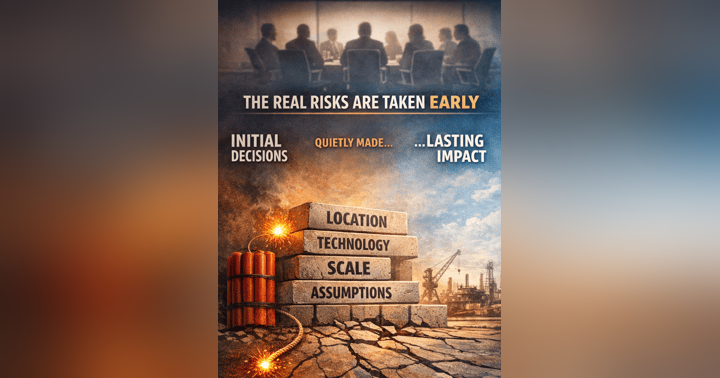
The Biggest Capital Risks Are Taken Before Anyone Thinks Capital Is at Risk